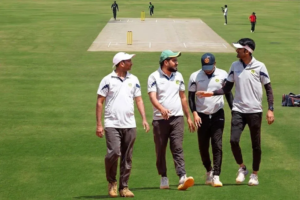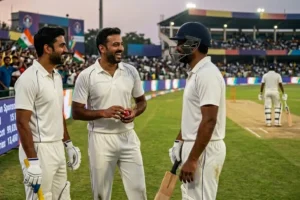

Corporate Cricket Leagues are professionally organized cricket events where teams are named after companies, start-ups, and business groups, and not after cities or states. Like T20 cricket, these events are planned in an organized manner that combines the excitement of competition with the advantages of business exposure and networking.
In recent times, corporate cricket leagues in India have transformed from weekend games to organized sporting events with trials, auctions, live streaming, sponsorships, and match management. What was earlier a casual affair is now a serious platform for professionals who are cricket enthusiasts.
Why Corporate Cricket Leagues Are Growing Rapidly
The modern corporate professionals look for something beyond the office work and the desk job. A corporate cricket league provides a well-balanced mix of competition, fitness, and socializing.
The following are the main reasons why corporate cricket has become so popular in such a short amount of time :
- T20 cricket in a professional setting
- Making connections with CEOs, founders, and important decision-makers
- exposure of the participating companies’ brands
- Rejuvenation and fitness
- Unparalleled team building outside of the workplace
Because of this special combination, corporate cricket is one of the sports formats that is expanding the fastest outside of traditional domestic and franchise-based leagues.
How a Corporate Cricket League Works
To guarantee fairness and high-quality competition, the majority of corporate leagues have a clear and organized framework.
Registration of Teams
To guarantee corporate presence, companies establish teams under their corporate identity while imposing certain eligibility requirements.
Trials of Players and Shortlisting
To ascertain their talent level and guarantee a degree of rivalry between teams, players can undergo screening or trials.
Auction or Draft System
Teams can choose their players using a transparent, systematic auction or draft system that guarantees high-caliber team selection.
League Games in the T20 Format
To ensure professionalism in the game, the matches are played in a regular T20 format with certified umpires, scorers, and match officials.
Finals and Knockouts
The best teams advance to the semifinals and finals – which are followed by a championship game.
Popular Formats in Corporate Cricket Leagues
Corporate cricket leagues may differ slightly depending on participation and logistics, even though T20 cricket is the most popular format.
Typical formats consist of :
- The most popular format is the T20 League.
- League stage, then the knockout phase
- Matches during the day or at night
- Schedules for working professionals on the weekends or in the evenings
These formats are made to strike a balance between corporate job obligations and the level of competition.
Benefits of Corporate Cricket for Companies
Corporate cricket leagues are more than just sporting activities; they deliver measurable business and cultural value.
- Increased corporate exposure and employer branding
- increased morale and engagement among employees
- Relationship to discipline, cooperation, and health
- Natural brand marketing via online, media, and cricket platforms
- Opportunities for both internal and external networking
Participating in a corporate cricket league becomes an extension of the business culture for many organizations.
Corporate Cricket League vs Local Tournaments
| Corporate Cricket League | Local Cricket Tournament |
|---|---|
| Registered corporate teams | Open or mixed teams |
| Structured T20 format | Often informal |
| Trials or auctions | Direct entry |
| Sponsorship opportunities | Limited exposure |
| Media & live streaming | Rare |
| Official match management | Varies |
This clear distinction is why corporate cricket leagues are increasingly preferred by professionals and brands alike.
Why Corporate Cricket Leagues Matter in India
Because of the work culture, passion for cricket, and increasing focus on wellness in India – corporate cricket leagues are even more important. Corporate cricket leagues provide a positive forum for collaboration and competition – acting as a bridge between people’s passions and the business world.
Corporate cricket is moving from the periphery to the mainstream in India thanks to improved infrastructure, increased corporate involvement and online coverage.
NICCL T20: A New Benchmark in Corporate Cricket
The NICCL T20 represents the new generation of corporate cricket leagues, which are built on professionalism, open practices – and long-term growth. Starting in North India, this project is gradually growing to become a corporate cricket hub for the entire country and the world.
By focusing on organized procedures, competitive levels and brand-friendly exposure, NICCL T20 is helping to change how corporate cricket leagues – are perceived and structured.
Who Can Participate in a Corporate Cricket League?
Participation is generally open to :
- Corporates and MNCs
- Startups and tech companies
- Business groups and enterprises
- Professional working individuals (as per league eligibility criteria)
The rules may differ slightly depending on the league, but the emphasis is on having a strong corporate identity.
The Future of Corporate Cricket Leagues
The future of corporate cricket is in terms of scale, structure, and sustainability. With growing interest from sponsors, enhanced live streaming facilities, and the involvement of professionals from different regions, corporate cricket leagues are on the verge of becoming a sustainable sporting platform.
Corporate cricket is all set to become a respectable and acknowledged aspect of the cricketing world – thanks to leagues that transcend national boundaries and corporate participation from all over the world.
Final Thoughts
The corporate cricket league is now a full-fledged sporting ecosystem where corporate culture and competition meet – rather than a side project. The corporate cricket league is set to shape the future of organized cricket for working professionals with its professional management, transparency, and increasing participation.
As NICCL T20 and other such platforms continue to expand their reach across the country and the world, the corporate cricket league is set to become a credible platform for talent, branding, and networking.
Register your corporate team for the upcoming season
FAQs – Corporate Cricket League
A corporate cricket league is a structured cricket tournament in which teams comprise companies and professionals, played in the T20 format.
A corporate cricket team has 11 players on the field, just like any other format of cricket.
Employees of companies, startup founders, business owners, and working professionals can play under the league's rules.
Yes. Modern corporate cricket leagues are played professionally with umpires, officials, set timetables, and league structures.
Corporate leagues have registered teams of companies, formatted T20 cricket, and organized processes such as trials or auctions.
Yes. Corporate cricket leagues provide sponsorship opportunities such as team branding, ground presence and online promotion.
Leagues such as NICCL T20 are working towards professionalizing corporate cricket in India.